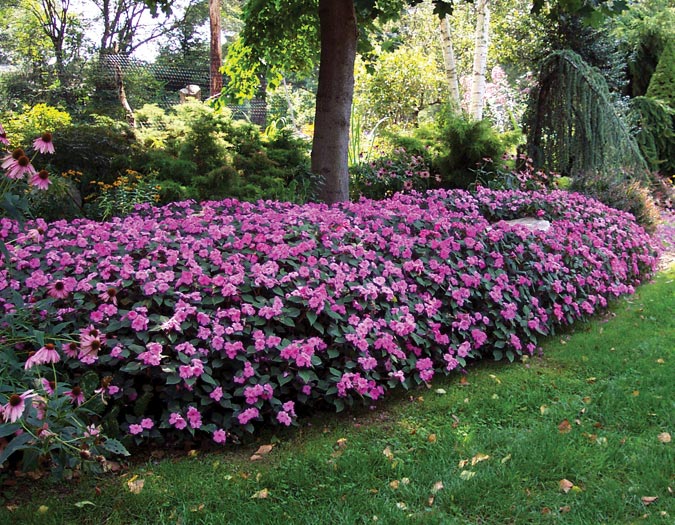
In construction, you call before you dig. In gardening, you dig before you buy. Providing the right soil conditions for your plants is key to success. There are many different approaches to creating a bed, but most methods involve the same basics.
Siting the Garden: Pick a spot away from trees and roots. Also, consider where you spend time and relax. You want to be able to view the garden from there. Keep in mind the plants you want to grow and the site’s light conditions. They must match up. If you want to grow plants that require full sun, you don’t want to select a site in the shade. Outline the bed with spray paint or lime or even a garden hose.
Digging: The current groundcover, usually sod, must be removed. For small areas, it is easy enough to use a shovel and skim off the top. Remove as little topsoil as possible. Some people use an herbicide like Roundup. You must then wait about two weeks for the vegetation to die. If using Roundup, you can till the groundcover right into the soil. When done, take a shovel and dig down about 8 inches or the length of shovel. Turn over the bed, removing large rocks and roots.
Amending the Soil: Whatever your soil type, amend with compost and Gro-Mix. Compost lightens the soil, retains moisture and provides nutrients. Bags or bulk compost can be purchased at the nursery. Gro-Mix is a soilless mixture of vermiculite, pearlite and other neutral amendments to lighten the soil. Using a rototiller or pitchfork, mix the amendments and some all-purpose granular fertilizer like Plantone into the soil. For vegetable gardens, it is often wise to mix in some lime. Hollandia staff can help you determine amounts needed for your garden. Wait about two weeks before planting to let the bed settle.
Ideas:
Place some large rocks in the garden. It adds structure.
Consider adding statuary.
Many gardens benefit from a tall vertical element like a birdhouse or a trellis.