Planting: Use Hollandia’s planting guide for planting. To make planting conditions even more luxurious, dig the hole a little wider and deeper than recommended and generously mix in compost with the backfill. Hydrangeas like a moist, well-drained soil.
Watering: Follow the watering instructions in the planting guide to get the plant established. Water them deeply during dry spells.
Fertilizing: Apply Plantone fertilizer once early in the spring and again in June.
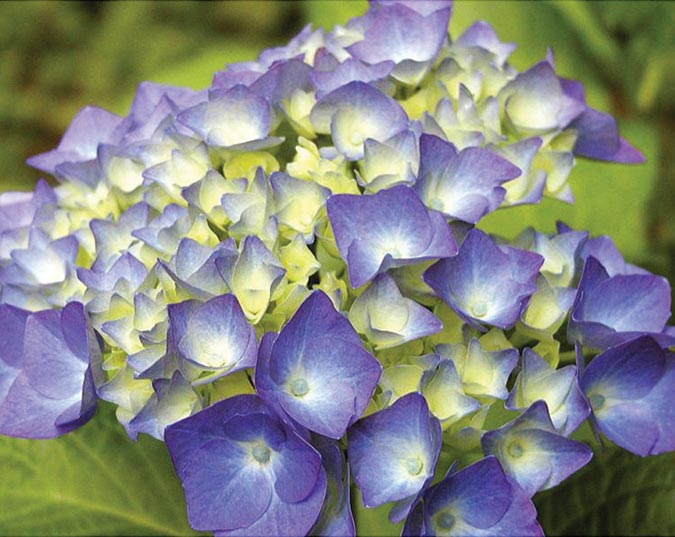
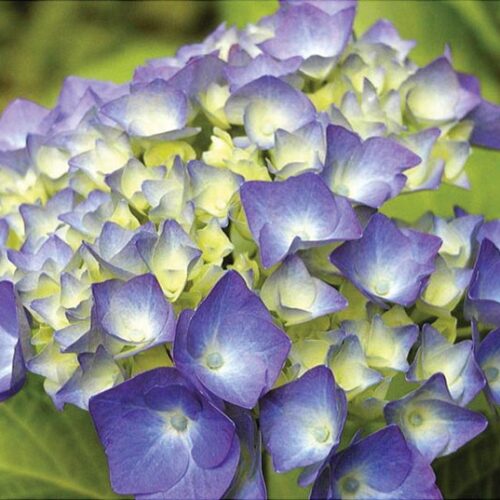
Blue or Pink? With hydrangea macrophylla, flowers are pink if the soil is alkaline and blue if the soil is acidic. To make your flowers pink, add lime. For blue, add aluminum sulfate or garden sulfur. Add to the soil in the spring.
Pruning: With hydrangea macrophylla, most varieties bloom off old wood. Prune plants during or after flowering. Do not prune in the spring. Some new varieties, like ‘Endless Summer,’ bloom on new shoots as well as old ones. Deadhead to encourage rebloom and follow the same pruning instructions. In this region, sometimes all the old wood is damaged from harsh winter conditions (i.e. no flowers for the year). If this happens, wrap burlap around the plant for the winter or move to a more protected spot. Hydrangea quercifolia blooms off of old growth, too. For a compact plant, prune after it flowers. Hydrangea arborescens blooms on new growth. Sometimes, if deadheaded, more flowers appear later in the summer. Cut within six inches of the ground in winter. As for hydrangea paniculata, prune back hard each spring to encourage a strong base for the heavy fall flowers. It also blooms on new growth.