
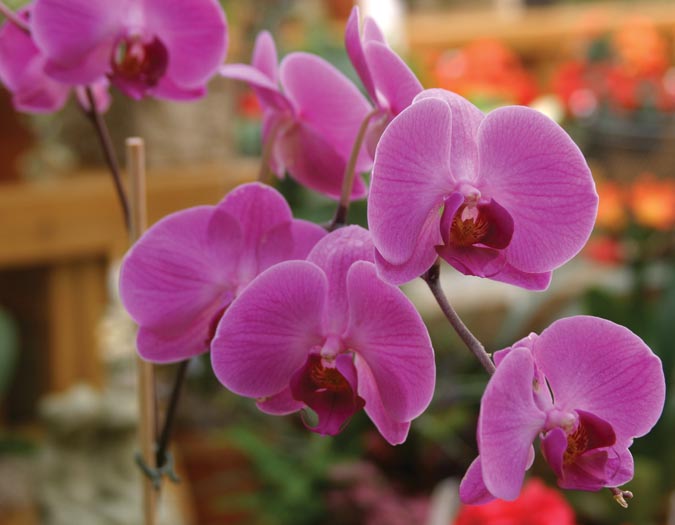
Orchids
Tropical orchids are exotic, elegant and can bloom for exceptionally long periods. Hollandia offers a variety, including Phalaenopsis hybrids and Oncidiums.
Light & Temperature:
Orchids generally like as much indirect light as possible. A window facing east or southeast is often the best location. They should never be placed in direct sun. From early May to late September, you should watch light levels in south windows to avoid burning; you may have to move your orchid away from the window or place them behind a sheer curtain to decrease light intensity. Most orchids can also be damaged if temperatures drop to 50 degrees. They like warm, moist temperatures around 70 degrees. Of all the house orchids, Phalaenopsis generally tolerates normal house temperatures the best. Each variety, however, requires slightly different light and temperature conditions. Tags on your plants will give you specific instructions.
Watering:
Orchids usually suffer from overwatering. Over watering may cause the roots to rot. Do not set a fixed watering schedule. Feel for moistness. If it feels almost dry, then it is time to water. Orchids like to dry between watering. One shot glass of room temperature water approximately once every two weeks.
Hibernating: When an orchid is finished blooming, it’s blooms will wilt and fall off before it enters a resting period. Winter time is typically when Orchids will enter a resting period. Trim stems back to a bit above the largest node. This node is where a new branch can potentially form. Resting is a normal part of the orchid lifecycle in which your plant is storing up energy to re-bloom. During this time, move your orchid to a new location, preferably a cooler location. This mild stress is needed to encourage new blooms. Dormancy in orchids may last anywhere from six to nine months, it is normal & healthy.
Fertilizing: Fertilize your Orchid once per month, only when there’s no blooms. We recommend Jacks Orchid Bloom Buster. Soak plant in fertilizer for 10 minutes. Remove from fertilizer and return it to its pot. Please recycle and use any left-over fertilizer in other household plants.
Soil:
Our orchids are already sold potted, and most orchids do not need repotting more than every two years. Do not use regular potting mix. Orchids prefer a well-draining, moisture-retentive soil. Hollandia offers a special potting mix just for these plants.
For more information, Hollandia recommends these books:
- Taylor’s Guide to Orchids
- The Orchid: From the Archives of the Royal Horticultural Society
- Orchid Growing for Wimps